Showing posts with label Crime. Show all posts

Monday, July 30, 2018

Pulp Review: The Eyes of the Shadow


Street & Smith had a hit on their hands with the Shadow, and the second issue of Shadow Magazine hit stands in July of 1931 featuring The Eyes of the Shadow.

The story concerns itself with Bruce Duncan, who's rich uncle Harvey recently passed, being awakened in the night from a foggy sleep to see an ape-like creature stealing something from a hidden safe in his bedroom.

Harvey Duncan had saved a Czarist general during the Russian Revolution. The general had hidden away a large fortune, and had promised it to seven men who had helped him greatly, and Harvey was entrusted with the secret messages that would summon the men to a meeting place when the time came to distribute the reward. That was what was stolen from Bruce's room that night.

Worried, Bruce seeks out an old acquaintance of his uncle's, Isaac Coffran, who might know about Harvey's situation.


Meanwhile, Harry Vincent, agent of the Shadow, has a chance encounter on a train with Steve Cronin, a gangster and hired killer from the The Living Shadow. Cronin doesn't recognize Vincent, so the agent follows Cronin to Harrisburg, PA and tries to worm his way into Cronin's current scheme. Cronin suspects something, and saps Vincent, leaving him to die at a railroad crossing, but fate delays the train, allowing Vincent to wake up in time to drive to safety.

Pieces of a puzzle begin forming. Several prominent men have disappeared over the course of several weeks, each secretly one of the heirs to the Russian general's fortune. Meanwhile, Bruce stumbles into a trap laid by the sinister Coffran...


Expanding on the first story, Harry Vincent remains the real protagonist, with fellow agent Claude Fellows and Bruce Duncan acting as secondary viewpoint characters. The beginning establishes that weird crimes are the domain of the Shadow, and a murderous ape-man is a solid way to set the tone.

Without delving into the juicy plot details, I can tell you that the story has several excellent set-pieces. Bruce Duncan being saved from a death trap house by his Hindu servant Abdul and Harry Vincent (and the Shadow) and a thrilling showdown in rural Pennsylvania that starts with an abandoned cemetery and ends with a watery grave.

The real showstopper segment is in the middle though, with the Shadow tailing Coffran's henchman into a criminal hangout and willingly walking into a trap where he brings a gun to a knife fight, and has to survive several dozen armed thugs. Its great.

It marks the first appearance of the Shadow as Lamont Cranston, wealthy young man about town. While Walter Gibson's pulp stories would eventually reveal that Cranston was not the real identity of the Shadow, the 1937 radio show would run with the idea. Another difference with the radio version, which depicted the Shadow as a bodiless voice, is how this story takes great care to emphasize the Shadow's eyes blazing with righteous indignation when he's on the prowl. It'll be interesting if this character trait continues or if Gibson later abandoned it in favor of something else.


Its probably purely coincidental that the first story where a dark avenger of justice is revealed to secretly be a wealthy playboy also features a rich young man named BRUCE. Pure coincidence. Surely

Is The Eyes of the Shadow good? Hell yes. Its a brisk, action packed thriller that ramps up the supernatural side elements of the Shadow while also making him more human, and placing much of the important action in small town Pennsylvania is a great change of pace from the concrete jungles of New York City. Totally recommended.

Monday, August 28, 2017

Movie Review: Mr. Majestyk (1974)


1974's Mr. Majestyk is a curious little early action film that's largely been forgotten, despite having a reasonably large pedigree.

It stars timeless tough guy Charles Bronson as Vince Majestyk.

It was written by pulp western and crime novelist Elmore Leonard.

And it was directed by big picture filmmaker Richard Fleischer, who directed 20,000 Leagues Under the Sea, Soylent Green, Fantastic Voyage and, uh, Conan the Destroyer.

Its about a grumpy Vietnam veteran with a criminal record who now owns a melon farm in Colorado. All he wants to do is bring in his harvest for the year, but fate seems to have it out for him.

Sounds like a Steinbeck novel about the plight of the working class and death of the American Dream, right?

Wrong. This is Bronson we're talking about, not Tom Joad.

After a confrontation with a small time shakedown scheme, Majestyk gets arrested on bogus charges. During a stay in prison, he meets mob hitman Frank Renda, played by gangster character actor Al Lettieri. The two hate each other immediately.

When the mob tries to spring Renda during a prisoner transfer, a firefight with the cops ensues. In the chaos, Majestyk grabs the keys to Renda's handcuffs and drives off with him in the prison bus. Renda tries to cut a deal, but Majestyk has other plans.

He wants to hand the hitman over to the police in exchange for dropping the charges against him so he can go back to his melon farm. It doesn't work out as planned. Renda escapes and boy is he mad.

The good news is that the charges against Majestyk got dropped. The bad news is that Renda's out to kill him. The best news is that he can go back to his melon harvest. On one condition: That he act as bait to lure out Renda.

The harvest is brought in successfully. He starts up a relationship with migrant worker and union activist Nancy Chavez (Linda Cristal). He helped her out at the beginning of the movie and hired her group.

But then tragedy!

Renda makes his move, but Majestyk's not at home, so the mobster settles for the next best thing: destroying the melon harvest with sad violin music playing over it. I swear it makes more sense in context.


What follows is a very satisfying road to revenge. Its got shootouts. Its got an old Ford pickup barreling down perilous mountain trails with Bronson bouncing around in the flatbed shooting a shotgun. Its got ramp jumps. Its got a car going over the side of a cliff and exploding. Its got Bronson jumping through a window blasting away with his shotgun.

Its good stuff.

There's a few nods to the labor disputes of the early 70s, but at its core, its basically a libertarian western. The man just wants to get his harvest in and make some money, and the cops do nothing except get in the way of that.

Everybody else in the movie thinks he's crazy, since with all the madness going on, his main fixation is the melon harvest. But in context, it makes sense. Its his livelihood and independence on the line, and he'd be ruined it he couldn't sell the crop. Even the melon massacre works in that context. The hero and villain both understand the symbolism of the crop.

There are some slower parts here and there, but Leonard's script keeps things building nicely.


It may not be his finest work, but at the end of the day, its Charles Bronson kicking ass for a hundred minutes. What more do you need to recommend it?


Sunday, August 20, 2017

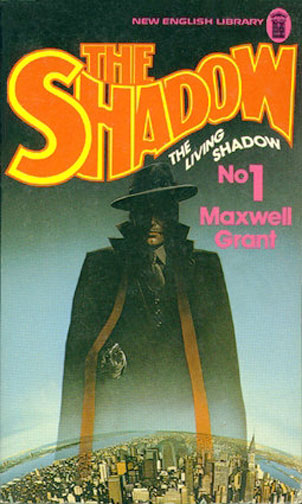
Pulp Review: The Living Shadow


The origins of the Shadow are an interesting, and appropriately twisting gyre of early cross-media promotion.

Once upon a time, Street & Smith published a pulp mag called Detective Story Magazine. On July 31, 1930, Detective Story Hour premiered on the radio for adaptations of stories from the magazine, and to shill other Street & Smith publications. The narrator of the show was a mysterious voice known only as The Shadow (a clever piece of marketing itself).

It worked, but not exactly as expected. The Shadow's sinister charisma had audiences going to the stands to buy magazines, but they weren't asking for Detective Story. They wanted The Shadow. Which didn't exist.

Street & Smith were smart enough to see a demand hungry for a supply, and hired up-and-coming mystery writer (and former reporter, stage magic afficionado, and crossword puzzle writer) Walter B. Gibson, to create a character whole cloth out of nothing more than a voice.

Under the pseudonym Maxwell Grant, Gibson would go on to write 300 Shadow novels, so it worked out pretty well.

Shadow Magazine Volume 1, issue 1 appeared on stands in April of 1931, featuring The Living Shadow, Gibson's first published Shadow story.

What follows is pulp as hell.


We meet suicidally depressed Harry Vincent on a bridge in New York. He got a letter from his old girlfriend back in Michigan dumping him, and so like a bitch, he jumps.

Fate intervenes in the form of the Shadow, who yanks him back onto the bridge and offers him a deal: Harry's financial woes are forever taken care of, but he has to obey any and every command of the Shadow's. Or they could go back to the bridge and Harry goes over the railing again. Harry's life belongs to the Shadow now, and decides his old life is dead anyway, so he eagerly agrees to become an Agent..

It doesn't take long. Harry is introduced to another Shadow Agent, intermediary Claude Fellows. Harry is sent into a nearly fatal disastrous investigation of a fence operating out of a tea shop in Chinatown. Re-shuffled to a murder investigation in Long Island that's got the police stumped.

Mystery! Investigations! Misdirection! Disguises! Murder! Car Chases! Fistfights! Deathtraps! Crossword Puzzles! About the only thing it doesn't have is estrogen. Margo Lane wouldn't appear in radio until 1937 and in the pulps until 1941.

Anything else would give away the plot, and it takes some very clever turns.


What's more important is that it establishes the Shadow as a character: He has a mysterious drive to punish evil-doers and is fabulously wealthy. He says that he can spend the lives of his agents if he wants to, but goes to great lengths to help and protect them in danger. He is a master of disguise beyond normal physical limitations. He can travel convincingly through shadows and its never made clear if its supernatural or not. He has his trademark laugh. These last bits move the story from a master detective with enough prep-time hax to make Batman blush (makes sense, since Batman's the bastard son of the Shadow) into supernatural fantasy.

What's even more amusing is that at one point, Harry Vincent is instructed to tune into the radio at a specific time and channel to hear his next orders from the Shadow. It is a blatant nod to the the Shadow's real-life radio presence and a brilliant piece of cross-media marketing.

Imagine being a loyal listener of the show and finally reading the Shadow's print stories only for it imply that at any time, you, yes YOU, could hear instructions from the Shadow to help him in his crusade on crime. Really tickles the tympanic membrane, doesn't it?


As an introduction, The Living Shadow succeeds, such that Street & Smith would publish it again in hardcover the next year and there would be numerous reprints over the years. Its not the Shadow and his mythos fully developed, hell, the Shadow's identity as Lamont Cranston or Kent Allard isn't even established yet. Yet there's enough there to be unmistakably The Shadow, and its fun as hell.


Highly recommended. 

Wednesday, April 01, 2015

“And if you were a man, baby, I’d knock your teeth out.”


So movies have taught me that your average 1950s teenagers were all in their 30s and as a course of habit always getting into every kind of convoluted predicament imaginable. Case in point: Daddy-O from 1958.

Plot
It starts with Phil (Dick Contino) driving a truck and being cut off by a curvy blonde in a Thunderbird, and he runs her off the road. Her name’s Jana “Jan” Ryan (Sandra Giles), and they argue so much that its obvious they end up together. They meet again at a restaurant/bar where Phil, “Daddy-O” to his friends, sings to the crowd on occasion. One of Phil’s friends, Sonny, is in a sullen and rather creepy mood (see, its ironic because his disposition doesn’t match his name, which...eh, you get the idea). Sonny’s in bad with a fat man named Sidney Chillis, sort of a cross between Orson Wells wand Sidney Greenstreet (played by Bruno VeSota). Chillis is obviously evil, and even has a slack-jawed henchman wearing coke bottle glasses. His name’s Bruce Green (Jack McClure) and he runs a gym and he’s incredibly unintimidating.

Whoo, things are getting complicated. Jan meets Phil again at the restaurant and challenges him to a race. Loser has to buy pizza. They get separated during the race and independently, Sonny was run off the road by Chillis and Bruce and died. The police think Phil did it through reckless driving, but his car doesn’t show any damage from a hit & run. Still, Phil’s license is revoked for other traffic violations because reasons. Phil suspects Jan, but she didn’t do it. Together they go into junior detective mode and track Sonny’s trail to Chillis and Bruce. Chillis offers Phil a job as a singer and errand-boy for his new club the Hi-Note, and Phil accepts, getting a fake ID and a new car. Phil also takes a codename (which is just his performing nickname) for his shady deliveries. Complicated story simplified, Chillis is using Phil to run dope for him while Phil tries to figure out the cause of Sonny’s death. Basically it leads to a goofy climactic fight scene in a basement filled with wine racks.

Characters
Contino is affable enough as Phil, though in a somewhat bland way. Phil gives the impression of being a decent guy who doesn’t think things through before acting. His song, “Rock Candy Baby” is kind of bad, but also just catchy enough for the refrain to worm its way into your head and remind you how bad it is every now and then.

Jan is spunky and shoots her mouth off a lot in the beginning. She’s also a reckless driver. Then she morphs into a love interest/sidekick for Phil and the two have a brief falling out when Phil starts palling around with Chillis’s secretary for a little bit.

Bruce Green is, again, not an imposing henchman. The absurdly thick glasses lead to that perpetual squinty-look. You know, the kind where the nose scrunches up and the mouth hangs open a bit. Bruce’s face is like that the ENTIRE MOVIE.

Sidney Chillis is, oddly enough, the most interesting character. He’s smug and clearly crooked, but he’s also a really classy and erudite guy. He gives Phil two jobs doing what he likes (singing and driving), provides him a car, sets him up with a fake ID, and even gets him some nicer clothes. If it wasn’t for the whole “dope smuggling racket” he had going, he’d be a fantastic boss.

Conclusion
Wait, before the end, I have to note that a young John Williams did the musical score for this movie. Its jazzy and better than a lot of contemporary music, but also not quite the level of awesomeness that Williams would eventually reach. Still, the music’s pleasant.


Daddy-O is ultimately another inoffensive, forgettable teensploitation movie from the 50s. A few interesting elements/characters and a listenable soundtrack don’t do anything to lift it above its contemporaries. But I can’t say that its downright terrible. Its merely forgettable.  


No trailer for this, but here's Rock Candy Baby from the movie, because if I had to listen to it, you can too.

Thursday, July 26, 2012

“Oh my god, its Glenn.”


You would think that every movie with the word “Ninja” in the title is a gateway to cheesy, borderline stupid, fun. I was once like you, naive and innocent. Not anymore. I saw Ninja Empire. Which IMDB tells me is actually originally called Ninja Phantom Heroes (sometimes with USA added on) and was released in 1987 by producer Tomas Tang and director Godfrey Ho and re-titled to Ninja Empire in a boxed set I have, which is made even more confusing because Godfrey Ho released a different movie called Ninja Empire in in 1990.

Even trying to dig up information about this wreck makes my head hurt.

Story
Well, its another result of a foreign film getting edited up with some new footage of Americans. For instance, the main body of the movie is some kind of 70s Hong Kong crime story that features characters being introduced and killed off left and right without even knowing their names or any kind of investment in them, our fine producers decided to edit in a plot about a former prisoner who also happens to be a ninja (we called him “Camo Ninja” because of his outfit) getting his rank back and sent to spy on stuff in Hong Kong and running in to his arch enemy “Painter Ninja” (because of his suit as white as his bleached hair). What are their names? I think they’re Ford and Morris respectively, but that's irrelevant. There’s a Hong Kong cop named Christine who partners up with Camo Ninja as well, but again, that’s irrelevant aside from getting captured. They fight here and there, but the real story seems to be about a kind of dynastic struggle between some crime families. I dunno. The ninja are just tacked on. There certainly isn’t an empire of them and they certainly don’t have anything to do with large chunks of runtime involving gangsters.

Visuals/Effects
The edited in stuff is way, way, way cheaper than the Hong Kong gangster movie stuff. The crime movie stuff doesn’t have any ninja. Sadly, the ninja segments are also the most entertaining bits, since at least there’s fighting and ninjas exploding upon death. Yes, ninjas explode upon death in this movie. I don’t think that’s how they actually work, but who cares, its something happening on screen that you can sort of follow. I will concede that the fight choreography isn't that terrible. In addition to the overall badness of the mashup, the editing is schizophrenic, where things will cut violently to a completely unrelated scene. Stuff I’ve read on the internet also implies that there’s a longer 90 minute cut out there. The version I saw was 78 minutes long, which is more than long enough.


Behold our villain, and his ninja training...playground.


Writing
Pretty much everything I complained about for Voyage to the Planet of Prehistoric Women also applies here. Trying to shoehorn a completely different plot in just doesn’t work and the result is that both sections are incomprehensible. Whatever was written on the disc sleeve by way of a synopsis was for the 1990 Ninja Empire and not what this movie contained. I have no idea who these characters are, nor what they are trying to accomplish, nor why should I care.

Ninja Phantom Heroes/Empire goes an extra step by throwing in one of the most bullshit endings I’ve ever seen. Painter Ninja infiltrates Camo Ninja’s base to rescues his buddies, fights some more ninja, fights Camo Ninja, lots of crazy things are happening, ninjas are exploding, then there’s running around, and Painter Ninja turns around, ready to square off for a final showdown as Camo Ninja rescues the girl…

AND THE MOVIE JUST ENDS. No end credits. Just “The End.” IT JUST ENDS. As you sit in the ensuing darkness and silence, you feel two things: confusion as to what just happened followed by relief that the nightmare is over.

Sound
The sound is bad. The dub is atrocious and difficult to understand. Sound effects for things like shuriken are absurd. The music may be ripped off from other movies, according to some of the comments on YouTube (like reading YouTube comments is ever a wise decision).

Conclusion
Four-letter words. The angry kind that you don’t normally use in polite company. That’s what I would use to describe this movie. Hell, that’s what I DID use to describe this train wreck. I have a very high tolerance for schlock and can put up with a lot of crap but Ninja Phantom Heroes (USA)/Ninja Empire actually hurt. As bad as its two component stories are, they are much, much worse together. Zardoz is a coherent masterpiece compared to this. Troll 2 is a pleasant romp. About the only thing that I’ve seen that surpasses this movie in terribleness is Voyage to the Planet of Prehistoric Women. Ninja Empire is only slightly more watchable because things actually happen on-screen.


No trailer, but holy crap, this clip contains most of what happened after "THE END" of the cut I watched.

I'd say I was surprised that the fight devolves into Painter Ninja throwing tin plates at Camo Ninja, who fends them off with an umbrella that shoots bottle rockets, but I'm not. I just wish the rest of the movie was that memorable. 

Tuesday, September 06, 2011

“What was I supposed to do? Call him for cheating better than me, in front of the others?”

Right, so, Real Life has been kind of getting in the way of working on a side project such as this for a while now, which explains the big gaps in updates. Fear not! I have something big planned to get back in the swing of things come next month! In the meantime, September will likely continue to have spotty updates.

Such as this one!


Regarded as one of the greatest con man movies ever made, The Sting boasts an impressive roster of talent and the awards to match, winning Best Picture and 6 other awards for 1973. And it totally deserves those accolades.

Story
Johnny Hooker (Robert Redford) is a talented but small time con man in Joliet, Illinois during the 1930s. He’s partnered up with Luther Coleman (Robert Earl Jones) who’s looking to retire soon since he’s getting on in years. The two of them con a delivery boy for a mob and end up with way more money than they expected. Johnny pisses the money away gambling and he gets shaken down by crooked cop Lieutenant William Snyder (Charles Durning) who informs him that the money belongs to New York big shot Doyle “The Big Mick” Lonnegan (Robert Shaw) who’s none too pleased that a chunk of his money has gone missing. Luther is killed by Lonnegan’s thugs and Hooker escapes to Chicago, looking for a near-mythic friend of Luther’s named Henry Gondorff (Paul Newman). Hooker wants revenge on Lonnegan and Gondorff agrees to help him pull the Big Con on the crime lord.

What follows is a steady buildup to the Con that involves gathering a big team that includes Gondorff’s gal Billie (Eileen Brennan), the fast talking J.J. Singleton (Ray Walston), and the dapper Kid Twist (Harold Gould) among others. Lonnegan has a fondness for gambling, so the plan is to scam him out of a lot of money without him knowing he was even played. But things are tricky. Lonnegan’s no fool and while he doesn’t know what Hooker looks like, his men know he’s in Chicago. Lt. Snyder and a mysterious assassin named Salino are on Hooker’s trail, and the FBI are very interested in nabbing Gondorff at any cost. You better believe things are going to get interesting.

Visuals/Effects
Directed by the very talented George Roy Hill with Director of Photography Robert Surtees. Its quite a testament to the filmmakers’ skill that while the movie was made in the early 70s, it looks like it was shot back in the 1930s. I don’t mean the period clothing and props (though that’s an obvious requirement), but rather the whole visual feel of the film. It feels like it was made right before the Hays Code (and in color).

Pacing is also marvelously quick and the audience doesn’t get a moment to breathe from the moment Hooker gets to Chicago. It adds a feeling of underlying tension and urgency to even the more relaxed scenes.

Writing
Written by David S. Ward, the movie fires on all possible story cylinders. The character work is fantastic. Redford and Newman work exceptionally well together and their characters have a mentor and student relationship with some interesting twists that play on the inherent paranoia of men who make their livings by lying for big stakes. Shaw’s Lonnegan is also very well realized: Tough, craggy, ruthless, but oddly vulnerable when the con begins. The rest of the cast are well realized as well and given plenty of moments to shine.

The plot also deserves mentioning, because its incredibly well thought out. Unfortunately, I can’t say anything more about it without going into spoiler territory, and that would be a huge disservice to anyone who hasn’t experienced this movie yet. Suffice it to say that its one hell of a ride and rewards multiple viewings.

Sound
The soundtrack doesn’t have an original score. Instead a number of Scott Joplin tunes were conducted and adapted by Marvin Hamlisch. It took a while for me to warm up to the soundtrack because ragtime was old hat by the 30s, but after a while it grew on me. The innocence and above all, playfulness of the music really cuts the tension in some places and in others reminds you that this is a movie and you’re watching it to have fun, so relax.

Conclusion
The Sting is rightly regarded as a classic. Everything works exceptionally and the movie demands that you keep on your toes while you’re watching it. Absolutely recommended, to the point where it should be required viewing.


Thursday, February 10, 2011

“They pull a knife, you pull a gun. He sends one of yours to the hospital, you send one of his to the morgue. *That's* the *Chicago* way!”

I got tired of people giving me funny looks when I told them I hadn’t seen 1987’s The Untouchables. Well, now there’s one less reason for them to give me funny looks.

Story
Prohibition Chicago, a city effectively ruled by crime boss and bootlegger Al Capone (Robert De Niro). A young Federal Agent named Eliot Ness (Kevin Costner) arrives in town intent on enforcing the law and bringing Capone to justice. He has a rough time of it until he assembles a hand-picked team of not-dirty cops to help him out: Jim Malone (Sean Connery), Oscar Wallace (Charles Martin Smith) and George Stone (Andy Garcia). Together, they become known as The Untouchables (Dun dun dun) for their incorruptibility.

Visuals/Effects
Directed by Brian De Palma, the movie is really well shot with excellent pacing and some really impressive action set pieces. About the only thing I really, really didn’t like was the shootout near the end, the famous “Odessa Steps” remake in the station. I know, I know, its an homage to one of the great scenes of the silent era and I can respect that, but here its such a gigantic shift from the rest of the movie that it felt a little, I hate to say it, out of place.

And if you feel like seeing just how many times said Odessa Steps sequence gets homaged/referenced: http://www.youtube.com/watch?v=yH1tO2D3LCI

Writing
Screenplay by David Mamet and “suggested by” the book “The Untouchables” by (the real) Eliot Ness and Oscar Fraley. Naturally the screenplay takes a lot of liberties with history (there were more than just four Untouchables, Capone’s lieutenant didn’t die like that, etc) but that doesn’t really bother me since 20th century history isn’t my area. The dialogue is sharp, the characters well defined, and the story keeps moving at a good pace.

Sound
Original music by Ennio Morricone, and the music is very, very good.

Conclusion
The Untouchables really surprised me. In the best possible way. The cast all do a solid to excellent job with their characters, the writing and plot are incredibly solid despite the liberties they take with history, and the visual feel of the movie is incredibly stylish and well done (with one exception that I mentioned above). Awesome movie though, and heartily recommended.

Monday, December 27, 2010

“Integrity is something you sell to the public.”

1968, a year before Michael Caine and 3 Cooper Minis went on a merry chase through Torino in The Italian Job, Steve McQueen took his Ford Mustang through the streets of San Francisco in Bullitt. You bet your ass its time for the greatest car chase in cinema history.

Story
Lieutenant Frank Bullitt (Steve McQueen) is a tough detective, a man who’s known to get results, even if he is a bit of a loose cannon at times. That reputation for results at any cost is what brings him to the attention of ambitious District At tourney Walter Chalmers (Robert Vaughan), a man looking for dependable cops to protect a key witness against the mob, a key witness who also happened to run off with a large chunk of said mob’s money. Bullitt and his team are put on babysitting duty, and then it all goes to hell. The witness ends up dead and one of Bullitt’s men is in the hospital. Frank…doesn’t take it well, and he makes it his personal mission to find the guys who killed the witness and along the way uncovers a few interesting twists and turns. Bullitt is clearly a cowboy cop, but this isn’t an action movie. There’s a lot of investigation, a lot of angry scowling, and a lot of really thick tension as we watch Bullitt blur the line between doing his job and going rogue.

Visuals/Effects
Directed by Peter Yates, the obvious thing to talk about is the almost ten minute long car chase ¾ of the way through. In it, McQueen (who did his own driving in the scene) chases after a Dodge with two shotgun toting hitmen in it. It lacks the flash and busy editing of modern car chases, but more than makes up for it in narrative punch and character moments. Yes, a car chase with no dialogue and not much music is able to tell a self-contained story of cat & mouse between two cars while still being exciting. It starts off slow, builds and ultimately explodes onto the freeway. It sounds kind of silly to always look to Bullitt as the best car chase ever, but after having seen it (and in the context of the movie), I’m inclined to agree. Yes, its an impressive set piece, but its also building tension and moving the plot forward without words. There should be a “Car Chases 101” class for this kind of storytelling.

And that’s really something the movie does well. It escalates tension in a methodical and deliberate way. This isn’t a “blink and you’ll miss it” action movie. Some scenes, like a chase through a hospital, seem to go on for a very long time, but its all tightly calculated to keep you guessing and wondering.

Writing
Screenplay by Alan R. Trustman and Harry Kleiner. Based on the novel “Mute Witness” by Robert L. Pike. The story is full of interesting details, and much like real police work, the majority of it involves investigation and a lot of boring legwork occasionally peppered by violence. The medical scenes (a lot of the movie takes place in a hospital) are also quite interesting to watch, since you get a decent look at medical practice in the late 60s. And yeah, there’s a really interesting twist along the way.

Sound
Original music by Lalo Schifrin, and my only complaint is that there wasn’t enough of it. Seriously, Schifrin was an awesome composer, but there really wasn’t a lot of music in the movie. It is surprisingly quiet and restrained.

Conclusion
Bullitt has a well deserved reputation for having one of, if not THE best car chases in movie history, but that same reputation works against it, since it makes you think its an action movie. It is not. In a lot of ways it’s an early Neo Noir where you have a deeply flawed protagonist finding himself falling deeper and deeper into an ugly situation where there’s no easy way out of. Taken with that mindset, the movie is an incredibly taut thriller and totally recommended.

Friday, September 17, 2010

“You better not let the other guns know you have a favorite.”

Matthew Vaughan is really a director on the rise and a name to watch and he’s proving himself to be quite flexible. Consider this: He has directed three films so far: The crime thriller Layer Cake (2004), the fantasy Stardust (2007) and superhero film Kick-Ass (2010) (and he was the producer of Snatch. and Lock, Stock and Two Smoking Barrels). Today we’re looking at Layer Cake, his directorial debut.

Story
So we’re in London and have Mr. XXXX (Daniel Craig) as our anti-hero and narrator. He sees himself as a professional businessman who’s business is cocaine (and other drugs). Now, he’s got a system worked out that has so far let him make a lot of money and stay under the radar, and he plans on getting out of the game. Unfortunately, one of his biggest customers, the mobster Jimmy Price (Kenneth Cranham) has two last jobs for him. The first involves finding the coked out daughter of Jimmy’s crime boss friend Eddie Temple (longtime veteran Michael Gambon who’s been Dumbledore in the more recent Harry Potter films). The second involves finding a buyer for a large number of pills smuggled into England by a scummy drug dealer called the Duke (Jamie Foreman). Of course neither of these jobs go as planned and things just spiral out of control for Mr. XXXX and his associates.

The cast in this is incredible. Craig is a charismatic and dominant central figure, but the secondary characters really help flesh out the seedy underbelly of London here. XXXX’s associates, in particular Morty (George Harris) and Gene (Colm “Engineer O’Brien” Meaney), are quite badass, but there’s a hell of a lot of characters and they’ve all got something about them that makes them stand out. Oh, and there’s also Sienna Miller as XXXX’s love interest Tammy, but despite having secondary billing on the DVD case, is only in the film for all of four scenes. But she does look fine in those scenes.

Visuals/Effects
Director: Matthew Vaughan. Director of Photography: Ben Davis. Visually the movie is great. Scenes are great, there’s great use of color and the film has a lot of energy and tension that carry you through. Action scenes aren’t common, so when violence actually does occur it’s often quick and incredibly brutal, like the beating in the diner shot from the victim’s point of view. Powerful stuff. The movie also handles transitions incredibly well too.

Writing
Screenplay by J.J. Connolly and based on his own novel of the same name. The script is incredibly impressive. Characters are well defined, have arcs, frequently likable (or at least interesting) and the pacing is spot on. Twists come out of nowhere but they all make sense in retrospect and by the end of the movie, all loose ends are accounted for.

Sound
Original music by Ilan Eshkeri and Lisa Gerrard, which is good, and it’s also got a very good soundtrack featuring stuff from the likes of Joe Cocker, The Rolling Stones, The Cult and even Duran Duran.

Conclusion
I was thoroughly impressed. I mean, really, really impressed. Every fault I had with Snatch. (and I had quite a few) is absent in Layer Cake. In fact, that’s kind of how I want to describe this movie to people who’ve never heard of it. “It’s like Snatch, only with character development and substance.” Extremely recommended and a contender for my “Best Surprises” list.

Thursday, July 08, 2010

“Last I heard you were gonna have a talk with some fellas. Next thing I hear one of them's dead.”

Hey look, another Bruce Willis movie. This time starring in an American remake of Kurosawa’s Yojimbo that isn’t A Fistful of Dollars. Well, what it lacks in Sergio Leone, it makes up for in Christopher Walken. Here's 1996's Last Man Standing.

Plot
So it’s a small border town in Texas during the Prohibition. Our hero drives into town and by chance, finds a small gang war going on between Irish and Italian bootleggers and wouldn’t you know? One of the Irish guys pisses him off and there’s a duel. Our hero wins and finds himself stuck in town with two gangs that alternately want to kill him and get him to work for him. Sensing a quick buck, our anti-hero decides to work for both gangs, playing them off each other, until a Texas Ranger comes into town with an ultimatum: in ten days there had better be only one gang in town, otherwise the Rangers will wipe out both of them.

Characters
John Smith: Bruce Willis plays our stone-faced man without a past. He’s headed down to Mexico for reasons unknown, but he seems to be leaving Chicago. A tough guy, he does have a soft spot for women and helps several of them get away from the town throughout the film. I’m not entirely sold on the idea of Bruce Willis, an action guy with comedic charm, channeling Clint Eastwood’s humorless stoicism.

Joe Monday: William Sanderson (a veteran character actor) plays the town bartender and probably the most honest, likable guy in town. He lets Smith rent out a room and becomes a valuable source of information and scuttlebutt.

Sheriff Ed Galt: Bruce Dern (another veteran character actor) plays the town’s crooked sheriff. Kind of a jerk at first, he comes to not-hate Smith eventually since he finds the two gangs outsmarted by one guy somewhat amusing (and with the Rangers breathing down his neck, sees John as a guy who can do the sheriff’s job for him).

Fred Strozzi: Ned Eisenberg plays the head of the Strozzi gang and the first gang to hire Smith. Smith returns the favor by seducing Strozzi’s girl Lucy (Alexandra Powers).

Doyle: David Patrick Kelly plays the head of the Irish gang and he’s a lot more on edge than Strozzi. He’s also really paranoid about people looking at his girl, Felina (Karina Lombard), something Smith capitalizes on.

Hickey: Christopher Walken plays Doyle’s top enforcer, a cold-blooded killer with a nasty reputation, a hoarse voice and an appreciation for the Thompson submachine gun. Hickey is also the only crook who starts to figure out just what Smith is doing, which makes him pretty damn badass.

Captain Tom Pickett: Ken Jenkins plays the Texas Ranger who comes into town with the ultimatum. It’s a one-scene appearance, but come on, it is totally awesome seeing Bob Kelso with a big moustache bossing around Bruce Willis.

Visuals/Effects
Directed by Walter Hill with Lloyd Ahern as director of photography. The movie certainly looks good. Visually, it’s a cross between a Western and a gangster flick, so that’s rather fresh. The action scenes are often brutal and it is quite entertaining watching Mr. Smith gunning down hoods with dual pistols.

Writing
Alright, so the screenplay is by Walter Hill and based on Yojimbo by Akira Kurosawa and Ryûzô Kikushima (which in turn has some similarities to some Dashiell Hammett novels that aren’t The Maltese Falcon or The Thin Man). While this film doesn’t have any glaring plot holes or whatever, it certainly feels a bit on the recycled side, probably because Yojimbo & A Fistful of Dollars are both so very well known. Big shoes to fill and all that. The atmosphere of this film is also surprisingly dark, with a lot of death, destruction and unhappy people. Things get pretty bleak at times.

Sound
The original music by Ry Cooder is…very 90s, and not really in a good way. Eschewing the big orchestral or jazz sounds that you would expect of a movie like this, a lot of synthesized elements dominate the soundtrack. Moody, sure, but kind of an ill fit for this kind of movie.

Conclusion
There’s not much to say about Last Man Standing. It’s all right I suppose. I didn’t regret watching it and there were a few cool action scenes, so it did what it sought out to do. The cast was full “hey it’s that guy” moments and Willis & Walken both did adequately with the material. However, there isn’t a whole lot this movie does that isn’t done better by other films. This is the kind of forgettable movie that goes great with a hangover; interesting enough without having to tax your brain too much. Not really recommended.

Tuesday, June 15, 2010

“It rubs the lotion on its skin or else it gets the hose again.”

Yet another film from the “you HAVEN’T see this one yet?” pile, here comes 1991’s The Silence Of The Lambs, from Jonathan Demme, director of the blunt force drama Rachel Getting Married.

Plot
So, we’ve got a young, ambitious FBI trainee called in to try and persuade a former psychiatrist-turned cannibalistic serial killer into helping her (and by extension the government) track down a serial killer on the loose. The movie and book it’s based on are both the sequels to a novel called Red Dragon that was the 1986 movie Manhunter. Silence itself got a sequel: Hannibal, and then a new version of Red Dragon/remake of Manhunter. Confused yet? Don’t worry too much about it since Silence is the most famous of the franchise.

Characters
Clarice Starling: Jodie Foster is our plucky young hero who’s trying to crack this “Buffalo Bill” serial killer case wide open. She’s fine enough in the film, though I can’t say I’m impressed with the performance, largely because I can’t get over her Southern accent. Still, as far as protagonists go, she’s not bad and happens to be the only person that Hannibal Lecter would even consider talking to about the case. She’s also got a lot of baggage in her past, like her father being murdered and her being raised on a farm where, among other critters, there were sheep, which eventually gets around to explaining the title of the story. Though I have to wonder why the FBI would place so much reliance on a young rookie instead of, oh, I dunno, one of their BEST agents?

Jack Crawford: Scott Glenn is Clarice’s boss and the guy who pulls her into the case, appealing to her sense of ambition.

“Buffalo Bill”: Ted Levine (who’s done a surprising amount of voiceover work) is the film’s primary Villain and… Jesus… It’s. Fucked. Up. I mean, the guy’s a bisexual white supremacist (or something like that) who is killing overweight women and skinning them in order to make a “woman suit” so that he can transform into a woman in his sick mind. Great. There goes my appetite for the rest of the day. About the only thing in the world he likes is his little dog, Precious.

Catherine Marton: Brooke Smith is “Buffalo Bill’s latest kidnapping victim who also happens to be a Senator’s daughter. This naturally ramps up the pressure for the FBI to find the killer before he can kill her.

Dr. Hannibal Lecter: Anthony Hopkins is, of course, the reason to watch this movie. He is the suave, cultured and thoroughly unhinged cannibal that the FBI reluctantly turns to in order to help profile Buffalo Bill. And it is a command performance, even though he’s technically a secondary character and not even in the movie all that much. There’s no question that the guy’s a remorseless killer who manipulates people to his own ends, but the dangerous part about him is that he’s just so damn charming about it. Hopkins is a fantastic actor and, somewhat begrudgingly (because Hannibal is a SERIAL KILLER himself) the badass of the film.

Visuals/Effects
Directed by Jonathan Demme with cinematography by Tak Fujimoto. The film is well shot with lots of incredibly tense scenes. Mostly these are quiet dramatic conversations that wind up the characters and watch them interact, but there is one action scene that kind of comes out of nowhere about ¾ through that displays just how dangerous Lecter really is.

Writing
Screenplay by Ted Tally and based on the novel “Silence of the Lambs” by Thomas Harris. It’s well done. It hits all the notes required for an effective psychological thriller about serial killers doing terrible things to people. Also quite quotable, evidenced by the sheer number of times it gets pop culture referenced in other works.

Sound
Howard Shore did the score and its been a while since I saw it, so I don’t remember any of the music, unfortunately. But it’s Howard Shore, so by no means is it bad.

Conclusion
The Silence of the Lambs is a very well made film and kind of required viewing for modern cinephiles. Artistically successful in its ambitions and thoroughly disturbing, I respect the film a hell of a lot for holding up a mirror to some truly gruesome stuff. But I don’t actually like the film, though I'm glad I saw it. I wouldn’t want it in my collection. Hell, I don’t even think I want to see it again. Ever. Just remembering it makes me want to go take a scalding hot shower. So well done, movie, you’ve earned my respect AND revulsion.

Thursday, June 03, 2010

“Oh, gunfight, explosions, sharks, you know, the usual.”

Well, here’s 1998’s Lethal Weapon 4 (Director‘s Cut), the last in the series. 3 wasn’t bad, but it did feel a little dull around the edges. I have to admit, the modest 2 disc set with all four movies has so far been a totally worthwhile investment for 10 bucks.

Plot
So our heroes are facing the very real fact that they are getting on in years, but on the bright side, Riggs’ lover is pregnant and so is Murtaugh’s eldest daughter, so life springs eternal, yes? After a chance encounter on a boat, they stumble upon a boat smuggling Chinese slave laborers into the country to work for a counterfeiting ring run by the Triads, who are looking to expand their operations in the US considerably.

Characters
Sergeant Martin Riggs: Mel Gibson’s Riggs is finally starting to slow down as a cowboy cop. He’s got a girlfriend and a baby on the way. His life is finally turned around from where it was in the first movie. Its kind of nice to see him finally in a stable, happy relationship after four movies.

Sergeant Roger Murtaugh: Danny Glover’s Murtaugh is finally going to become a grandpa, though he doesn’t know it yet and his family is keeping it a secret from him. He also takes in a family of Chinese illegals from the boat because he kind of sees himself “freeing slaves” as he puts it (cheesy, yes, but also kind of nice of him).

Detective Lorna Cole: Rene Russo spends the whole movie pregnant, so she doesn’t get to beat ass like in 3. Still, she’s fine in the role for what it is.

Leo Getz: Joe Pesci’s character is now a private investigator, much to the endless amusement of our heroes. Still the same foul-mouthed rascal he was in the other films, he also gets a moment near the end where he gets to develop the character past the second dimension in a surprisingly touching monologue.

Rianne Murtaugh Butters: Traci Wolfe (who’s been in all of the Lethal Weapon movies as Murtaugh’s eldest daughter, I just left her off the reviews because each time previously would’ve read: She feels somewhat attracted to Riggs and at some point gets threatened or captured in the movie) is daddy’s little girl all grown up. She’s secretly pregnant and engaged to:

Detective Lee Butters: Chris Rock is a new cop on the force and an eager go-getter. And, since he’s going to be Roger’s son-in-law, he tries to make nice to him all the time. Murtaugh, amusingly enough, mistakes Butters for a homosexual for the level of ass kissing done.

Wah Sing Ku: Jet Li gets to be the badass of the film not just because he’s a martial arts superstar, but also because we’ve finally got a layered villain with some sympathetic qualities who remains a total bastard. He’s a bad man who’s big in the Triads and in charge of the counterfeiting ring. His goal is to secure the release and delivery to America of the “Four Fathers,” a group of very high ranking Triads.

Visuals/Effects
Richard Donner and director of photography Andrzej Bartkowiak handle the visuals very well in this one. And it’s got all the expected Lethal Weapon touches: car chases, shootouts, occasional fistfights and explosions. Nothing wrong with being consistent. Particularly memorable is the opening scene where our heroes have to take out a guy with a homemade flamethrower and suit of armor. Its not really important to the plot, but who cares? Its like Ned Kelly with a flamethrower vs. Riggs & Murtaugh.

Writing
Characters created by Shane Black, with Jonathan Lemkin, Alfred Gough & Miles Millar on story and Channing Gibson on screenplay. That may be a lot of names, but you know what, the story is quite a bit better than 3 and 2 in a lot of ways (Major points for giving us a good villain again). What I do have to admit (and this is for the whole franchise) is that despite the different writing teams and the constant additions of new characters to the recurring cast, the series really handles character growth and interaction really well. The characters click together very nicely which helps elevate the series above the often silly and implausible turns the plots take.

Sound
Michael Kamen, Eric Clapton & David Sanborn once more, and why break up a team that works, I say. There’s also songs from Van Halen & War.

Conclusion
Lethal Weapon 4 is a solid cap for the franchise, and you know what, it’s a fun series. Sure its not pretentiously high art, but it does deliver solid character-driven action/comedy with great banter and great action scenes. These are not bad things by any means. There are considerably worse ways to waste your time. I suppose the inevitable comparison to Die Hard must be made, what with the first films in each series being awesome (initially) Christmas-themed action thrill rides, but ultimately its really a case of looking at Coke & Cherry Coke. Its still the same sugar water, just with enough variations in flavor to justify appreciating them independently.

Now if only there had been a crossover film at some point with John McLane teaming up with Riggs & Murtaugh. Now that non-existent film would’ve had some killer explosions. Le Sigh.

Tuesday, June 01, 2010

“I got 8 days to my retirement, and I will NOT make a stupid mistake!”

1992 brought Lethal Weapon 3 to theaters, promising more Riggs & Murtaugh antics, which should never be a bad thing. Time for the Director’s Cut.

Plot
So Roger Murtaugh is eight days away from retirement and very, very, very aware of the danger that means to a buddy cop such as himself. So of course he & Riggs screw up royally in a bomb defusing situation and get busted down to patrolmen, where they stumble on a gunrunning scheme that’s putting a lot of high powered “cop killer” ammunition and guns in the hands of the LA street gangs (which restores them to sergeant status). Car chases, big explosions, buddy cop banter and shootouts ensue.

Characters
Sergeant Martin Riggs: Mel Gibson’s character is now trying to quit smoking, so in desperation he resorts to dog biscuits, displacing his addiction onto them. Its funnier than how I explain it. His whole arc is about starting a relationship with a new woman, finally having coped with (and avenged) his wife’s death.

Sergeant Roger Murtaugh: Danny Glover’s character provides some fun meta-commentary on the old cop movie cliché of the guy who’s “one week away from retirement.” Then he goes and shoots a gang kid in self defense who happened to be his son’s friend and falls into a guilt-ridden depression. Character development!

Leo Getz: Joe Pesci returns, only this time as a real estate agent for the Murtaughs’ who are trying to sell their house after Roger retires. Again, he’s a largely unwanted sidekick, but provides some useful information.

Detective Lorna Cole: Rene Russo plays an Internal Affairs officer looking into how the heavy firepower is getting onto the streets. She gets involved in the case with our heroes, then she gets involved with Riggs in particular, if you know what I mean. She also gets to kick some serious ass in the film, so why not, she’s the badass.

Jack Travis: Stuart Wilson is our bad guy, a cop gone rogue who’s running a massive gun smuggling racket because he wants to… wants to… get back at the police force for some reason? It’s been a little while since I saw it, but I’m really drawing a blank here on his motivation. That’s not a good sign in a villain. Though in his defense, he’s a very hands-on kind of villain who does his own dirty work.

Visuals/Effects
Richard Donner again, but this time with Jan de Bont as cinematographer. It’s a Lethal Weapon movie, so we get a lot of finely done action sequences. The shootout at the end is particularly memorable because it involves a construction site being lit on fire.

Writing
Jeffrey Boam and Robert Mark Kamen on screenplay & story duty with Shane Black getting credit for the characters. The movie hits all the right notes to qualify as a Lethal Weapon movie: witty character banter, simple villains you enjoy seeing get their comeuppance, the occasional heavy-handed social commentary and so on, but while the script gets more right than it does wrong (Riggs & Murtaugh are so fun that I just don’t really care about the “villain of the week” in these movies) there isn’t all that much that’s impressive from a storytelling standpoint. Happily, the “blowing stuff up” standpoint gets top marks.

Sound
Michael Kamen, Eric Clapton & David Sanborn are joined by Elton John on the score, which yields some pretty fun results. We also get songs by Eric Clapton, Elton John, Boyz II Men and Cypress Hill. It’s a pretty good spread.

Conclusion
Curiously, these Lethal Weapon reviews are relatively short, largely because I don’t have any reason to tear them to pieces or raise them up onto a pedestal. I’m also repeating myself a lot, like when I say this: Lethal Weapon 3 is a fun action movie with some great set pieces and entertaining characters, though it’s not a particularly original or transcendent film. So far, I’d say Lethal Weapon 3 was the runt of the litter.

Thursday, May 27, 2010

“I'm gonna die on a toilet, aren't I?”

Lethal Weapon was a big hit, so 1989 brought a sequel, the aptly named Lethal Weapon 2. I’ve got nothing else to add here so let’s get to the Director’s Cut.

Plot
So Riggs & Murtaugh start off in a car chase that ends in a crash and the discovery that the perp’s car was full of South African Krugerrands (coins illegal in the US at the time). After some mysterious threats to the Murtaugh family, the team end up running witness protection to a federal witness who’s going to rat out a South African drug smuggling ring hiding behind the consulate in Los Angeles, (remember, this was during Apartheid). Buddy cop antics ensue.

Characters
Sergeant Roger Murtaugh: Danny Glover seems to get the bulk of the character development in this movie, what with having his family threatened by bad guys. Again. Except its worse this time, since they break into his home several times and they’re eeeeeeeviiiiillll South African racists. Still, by the end of the movie, Murtagh proves himself to be quite the badass with his revolver.

Sergeant Martin Riggs: Mel Gibson is starting to heal from the loss of his wife, but then he finds out that one of the South Africans is a hired killer and was responsible for Riggs’ wife’s death in an “accident” that was meant for him. I’m not sure if that’s a plot hole or not, but whatever. He wants to get some vengeance for that.

Leo Getz: Joe Pesci turns in an interesting performance as a weasely, foul-mouthed white collar criminal who’s first on the list for the smugglers to wipe off since he’s going to testify. He becomes an unwanted sidekick for our heroes with some funny bits.

Arjen Rudd: Joss Ackland (who’s deep bass voice has been in a lot of movies and tv shows) is the smug and corrupt South African minister of diplomatic affairs for the LA Consulate, and DAMN he is a real bastard who waves around his diplomatic immunity like it was a sparkler on the Fourth of July. Only, he wouldn’t do that because he’s not American and… Okay, simile over.

Pieter Vorstedt: Derrick O’Connor is Rudd’s right hand man, and a real bastard himself. He’s the guy who killed Riggs’ wife.

Rika van den Haas: Patsy Kensit is Rudd’s blonde bombshell secretary who is the only not-evil South African in the film. She doesn’t agree with Rudd’s stances and doesn’t know he’s a drug smuggler. She also draws Riggs’ attention because, well, she’s hot. The relationship doesn’t really end well.

Visuals/Effects
Director Richard Donner & cinematographer Stephen Goldblatt again and visually we get a lot more of what the first movie established. Car chases, gunfights, occasional helicopter stuff and explosions (and various combinations thereof). Not very deep, but its well shot and fun to watch, so mission accomplished.

Writing
Shane Black & Warren Murphy on Story, Jeffrey Boam on Screenplay. The story is…a bit odd to say the least. First, it paints a significantly unflattering light on all white South Africans as either moustache-twirling villains or clueless/powerless to do anything. Look, Apartheid was an awful, awful system, but the lack of subtlety about it here is…not so much surprising as it is disappointing. The villains are pretty weak in this film compared to the last one, which is a shame, considering the character development done with Riggs & Murtaugh. It feels a bit like a very dark (and things do get surprisingly dark at points) R rated after school special in its message.

Still, the movie has some very bright spots, like the absolutely hilarious-yet-tense toilet bomb scene.

Sound
Michael Kamen & Eric Clapton joined by David Sanborn. The music is fine in general and includes quite a few songs by the Skyliners among other things.

Conclusion
Lethal Weapon 2 is an entertaining ride, but its also somewhat weighed down by trying to make some serious social commentary on institutional racism in South Africa and this isn’t the right kind of movie for that kind of effort. I mean, its got a toilet bomb for crying out loud! Not quite as recommended as the first, but it does continue the adventures of Riggs & Murtaugh, and that’s always a fun time.

Wednesday, May 26, 2010

“Now we question him. You know why we question him? Because I got him in the leg. I didn't shoot him full of holes or try to jump off a building with him.”

Remember how I was late to the Die Hard party? Same thing for Lethal Weapon, which is curious, because it involves director Richard Donner and writer Shane Black, both of whom have contributed to my considerable cinematic enjoyment over the last year. Let’s hope that hot streak continues with 1987’s Lethal Weapon, Director’s Cut.

Plot
So, it’s the holidays in LA, and a topless woman hopped up on cocaine falls to her death from an apartment building. MERRY CHRISTMAS! Turns out she was the daughter of a fairly influential army veteran who’s got a friend on the LAPD. That cop, a 20 year veteran who likes to play by the book happens to be assigned a new partner, a younger, suicidally reckless widower with a mullet. Together, they start investigating the death and discover that it might not have been a suicide after all. Can these two cops with opposite personalities learn how to become buddies? Well, yes, obviously. It’s a buddy cop movie.

Characters
Sergeant Martin Riggs: Mel Gibson is in full-on damaged goods mode as a cop on the edge with nothing to lose. Served in Vietnam, then joined the LAPD, he was a good cop until his wife died in a car accident a few years back. Now he lives in a trailer by the ocean with his dog and hires prostitutes to sit at home and watch The Three Stooges with him because he’s lonely. He’s also a gun-toting badass that’s been labeled a “Lethal Weapon” (DUN DUN DUN) by police psychologists.

Sergeant Roger Murtaugh: Danny Glover is a cop who’s a family man and 20 year veteran of the force and gets a new partner assigned to him on his 50th birthday. Guess who that is? Murtaugh is the voice of reason, by-the-book, slightly old fashioned half of the partnership. He also served in Vietnam.

Michael Hunsacker: Tom Atkins (who was the sheriff in the mostly lackluster My Bloody Valentine 3-D) is an old military buddy of Murtaugh’s. It’s also his daughter who fell out of the window at the beginning of the movie. He knows a bit more than he lets on.

General Peter McAllister: Mitchell Ryan is our Villain. The commander of a special forces unit called “Shadow Company” he decided to take his team rogue and go into cocaine smuggling business.

Mr. Joshua: Gary Busey is McAllister’s right hand henchman, and described as an albino (though not really). He’s, uh, got a pretty high pain tolerance. That’s about it as far as character development.

Visuals/Effects
Richard Donner and cinematographer Stephen Goldblatt deliver an impressive looking action movie. Yes, its very much an 80s cop movie, but its got quite a few memorable sequences, particularly the early scenes of Riggs behaving insane in the tour of duty (like taking out a sniper with a handgun and taking the quick way down with a ledge jumper).

Writing
Shane Black on script duty, and things work great. It's got great character development for the leads. The villains are kind of…there but they are suitably hateable. There’s a lot of wit involved and you really get to like the characters.

Sound
Original music by Michael Kamen and Eric Clapton, so it's quite good. There’s also quite a few Christmas songs like “Jingle Bell Rock.”

Conclusion
Lethal Weapon is a legitimately good time. Nothing particularly earthshaking, but it’s an effective character-driven buddy cop action movie. On par with Die Hard.

Thursday, May 13, 2010

“You using the whole fist, Doc?”

*Some shopkeeping notes: The schedule isn't quite ready to be back to Mon, Wed, Fri. But fear not, I'm going to try a Tues, Thurs updating schedule to slowly increase content. So, uh, yippy-skippy and all that.*

I have to admit I’ve never watched the 1985 Chevy Chase comedy Fletch before. Not sure how it happened, but there you go. The good news is that I’ve watched it now.

Plot
So, our Hero, Fletch, is an investigative journalist in LA who uses disguises to achieve deep cover to find stories that he publishes under the alias “Jane Doe.” While he’s pretending to be a homeless drug addict to investigate a smuggling operation, he gets approached by a millionaire with an interesting proposition. The millionaire, dying of cancer, wants Fletch to murder him in a week’s time so that his wife can collect on the life insurance. Then things get weird with Fletch donning various disguises to try and figure out what’s going on in a solid parody of hard-boiled detective stories. Hilarity ensues.

Characters
Irwin “Fletch” Fletcher: Chevy Chase is our deadpan hero. He’s got a fantastically successful column, but doesn’t really enjoy the glory since its written under a pseudonym, he’s constantly being hounded by his ex wife’s lawyer for money, so yeah, he’s a pretty flawed character. Guy’s also obsessed to Jack Nicholson levels with the LA Lakers. The comedy involves Chase doing what he does best, straightfaced delivery of off-center dialogue and general bullshitting. Fairly badass.

Alan Stanwyk: Tim Matheson is the rich guy who wants Fletch to murder him. Now, since Fletch isn’t actually a homeless drug addict, the reporter starts snooping around and finds that Stanwyck’s NOT actually terminally ill.

Gail Stanwyk: Dana Wheeler-Nicholson is Stanwyck’s wife and someone that Fletch becomes VERY interested in investigating closely. Preferably between the sheets.

Chief Jerry Karlin: Joe Don Baker plays a corrupt cop who’s got a station of ne’er-do-well police working for him.

There’s also George Wendt (Norm from Cheers), Kenneth Mars (from several Mel Brooks films) and Geena Davis in smaller roles, among other people.

Visuals/Effects
Directed by Michael Ritchie, the movie looks fine but isn’t amazing or anything. Mostly, the visuals serve to get Chevy Chase from one scene to another where he can be all funny and stuff. The makeup effects that were used on him for his various disguises range from nothing special to pretty damn good, depending on the character he’s playing.

Writing
Based on a novel by Gregory McDonald and adapted for the screen by Andrew Bergman (who worked on Blazing Saddles and, uh, Striptease) the plot could very easily work in the hard boiled detective or film noir genres. In fact, part of the comedy is that the plot and most of the characters are treating the movie that way while Fletch spends the entire time snarking his way through and completely wrecking that illusion of seriousness.

Sound
Original score by Harold (the guy who wrote “Axel F” for Beverly Hills Cop) Faltermeyer. He wrote the theme song for the movie, “Bit By Bit” and there are some other very 80s songs throughout the movie.

Conclusion
You know, I was pleasantly surprised with Fletch. It wasn’t as “knee-slappin’ hee-haw’in” funny as I thought it would be, but its incredibly clever and much better plotted than I expected. It’s a solid comedy.

And no, I don’t think there’s a need to track down the 1989 sequel Fletch Lives.


That's...actually an awful trailer.

Monday, March 01, 2010

“Hamburgers! The cornerstone of any nutritious breakfast.”

Might as well make it a double feature of Tarantino films that I get weird looks for not having seen before. Here’s 1994’s Pulp Fiction, which is considered one of Tarantino’s best.

Plot
So…its complicated. We’ve got the interlacing stories that all connect to a crime boss. One story involves the misadventures of a pair of loquacious hitmen trying to get a MacGuffin in a briefcase to their boss. Another involves one of the hitmen taking the boss’s wife out on the town, and finally we get the story of a boxer who tries to cheat the crime lord by not throwing a fight and then trying to get away with it. Now take those three main storylines, and just mix them up out of order into several chapters that you have to piece together like a jigsaw.

Characters
Vincent Vega: John Travolta became a respectable actor again after this. The not-coincidentally named Vega is a pretty dumb lug who’s just back from Europe. Vincent is a (mostly) competent hitman, but he’s also incredibly sloppy, a heroin user, and has absolutely terrible trigger discipline that causes more problems.

Jules Winnfield: Samuel L. Jackson in the movie that made Samuel L. Jackson the badass he is today. Jules is the jheri curl wearing, eloquent and smarter member of the hitman duo (and its fun watching him act circles around Travolta). Jules is awesome and everything he says is awesome too. He has a religious experience that convinces him to give up his murderin’ ways.

Marsellus Wallace: Ving Rhames is our crime boss. He’s got a hot wife, a strip club, and would like to make it very clear that he does not like being treated like a bitch.

Butch Coolidge: Bruce Willis is a boxer in the twilight of his career who agreed to throw a fight for Wallace, didn’t and gets into quite a bit of trouble because of it (and because he wanted to get his watch back)

Mia Wallace: Uma Thurman is Wallace’s sexy actress wife who likes to party. Ultimately a minor character in the grand scheme of things, she and Vincent have a night out that ends badly.

Winston “The Wolf” Wolfe: Harvey Keitel is a “cleaner” who gets called in to clean up a mess Vincent made in the backseat of Jules’ car. Manages he is the badass of the film (even out-badassing Jules).

Captain Koons: Christopher Walken plays an army veteran in a flashback that brings Butch’s father’s watch back home. Is it really necessary to the story? Not really. BUT its Christopher Walken going off on a truly insane monologue, so who cares?

Ringo/Pumpkin & Yolanda/Honey Bunny: Tim Roth & Amanda Plummer are two small time crooks who try to rob a restaurant that Jules & Vincent happened to stop into.

Marvin: Phil LaMarr (a guy who’s done a TON of voice work, including Samurai Jack and Green Lantern on Justice League) is Marsellus Wallace’s inside man that Jules & Vincent meet up with. Vincent’s trigger discipline leads to the "Bonnie Situation." Tarantino must have a thing against guys named Marvin.

Visuals/Effects
Quentin Tarantino had more of a budget here, and the presentation is incredibly slick with lots of great colors and scenes. Editing is outstanding too, since it maintains coherence throughout the breaks and stops in narrative.

Writing
Quentin Tarantino (with some help from Roger Avary) keeps going with the snappy dialog and sudden twists and turns. He juggles a lot of plots in this, and succeeds in keeping them all in the air and interesting. And for those counting F-bombs, its used 265 times.

Sound
No score, but plenty of music. This time most of it is drawn from the 1950s, including some surf guitar. Everything is better with surf guitar.

Conclusion
Pulp Fiction, while it doesn’t really have much of anything to do with the pulp serial novels of the 1930s, is a hell of a ride. Slick, stylish and eminently quotable, at times it feels a little too slick for its own good, but never gets bogged down in how cool it is. It’s a great movie, though I do like Reservoir Dogs better.

Friday, February 26, 2010

“Are you gonna bark all day, little doggy, or are you gonna bite?”

I’ve got no clever preface for this, so let me just say that I’d never seen most of Quentin Tarantino’s films, so I decided to remedy that, starting with 1992’s Reservoir Dogs.

Plot
Simply put, something goes wrong during a simple jewelry store heist for six crooks and the survivors are trying to figure out what the hell happened and who’s the rat in the group. Then there’s a bunch of flashbacks for certain important characters that help fill in the details to the audience. Simple, but effective.

Characters
Mr. White/Larry Dimmick: Harvey Keitel is a tough guy veteran of plenty of heists and when things go wrong, he tries to keep a level head while trying to keep the badly wounded Mr. Orange alive. He’s a crook, but he’s sensible and sympathetic.

Mr. Orange/Freddy Newandyke: Tim Roth is one of the younger members of the gang and he’s got the unfortunate distinction of spending most of the movie lying in a bloody mess on the floor with a gunshot wound to the stomach. Probably the most interesting character of the movie and Roth does one hell of a job.

Mr. Blonde/Vic Vega: Michael Madsen would be the badass of the film if he wasn’t a complete psychopath who gunned down a bunch of civilians when the heist went sour. He’s newly out of prison and likes listening to the radio while he works.

Mr. Pink: Steve Buscemi is our extremely paranoid (justifiable) guy who really tries to stay rational and calm, but he’s really on edge for the movie.

Mr. Brown: Quentin Tarantino is really only a factor in the table scene at the beginning and gets blown away during the chaos of the heist. Fodder, basically.

Mr. Blue: Edward Bunker (who actually did serve prison time for robbery, among other things) is the oldest and most mysterious member of the crew. Doesn’t say much and disappears after the first scene. We’re told that he was killed, but I don’t believe it. I think he’s still out there, and that makes him the baddest ass among badasses in this movie.

Nice Guy Eddie Cabot: Chris Penn is the, for lack of a better word, handler of the heist. He’s a daddy’s boy and an annoying bastard who isn’t very nice at all, actually. And he wears an ugly jacket all the time. He’s a good friend of Mr. Blonde and brings him into the heist.

Joe Cabot: Lawrence Tierney is the mastermind behind the heist. A local bigwig in crime, he’s the planner and he is very, very unhappy that it goes sour.

Marvin Nash: Kirk Baltz is the poor unfortunate cop captured and interrogated by Mr. Blonde. Poor, poor Marvin.

Visuals/Effects
Quentin Tarantino didn’t have much of a budget for the film, and most of it takes place inside of an empty warehouse with all the other locations basically being flashbacks. This works in the movie’s favor, since it gives the movie a claustrophobic feel that just feeds into the paranoia, which in turn ratchets up the tension. The action sequences, when they happen, are quite brutal, disturbing and awesome at the same time. Not to mention the now iconic scenes of the table scene and the walking scene at the beginning.

Writing
Quentin Tarantino has got a knack for snappy dialog, which is good, because most of this movie involves angry men talking and then shouting to each other and dropping F-bombs 272 times according to IMDB. He keeps it interesting, and the flashbacks help break up the tension nicely. A simple plot doesn’t mean a bad one, and Tarantino wrings a compelling drama out of the old formula of “it was supposed to be a simple job.” Though he does seem to like rambling a little too long occasionally.

Not that I would know anything about that.

*Cough*

Sound
No original score. Which isn’t to say there isn’t music. Its mostly worked in as a radio station (with deadpan comic Steven Wright as the DJ) that plays the songs of the 70s. Of particular note would be “Little Green Bag” by the George Baker Selection and “Stuck in the Middle With You” by Stealers Wheel, which, well, makes me view that song in a new light. *shudder*

Conclusion
Not gonna lie, Reservoir Dogs is one hell of an impressive movie. It’s a tight little indie film crime drama. Totally recommended.